What Should Be Included in a Capability Statement?
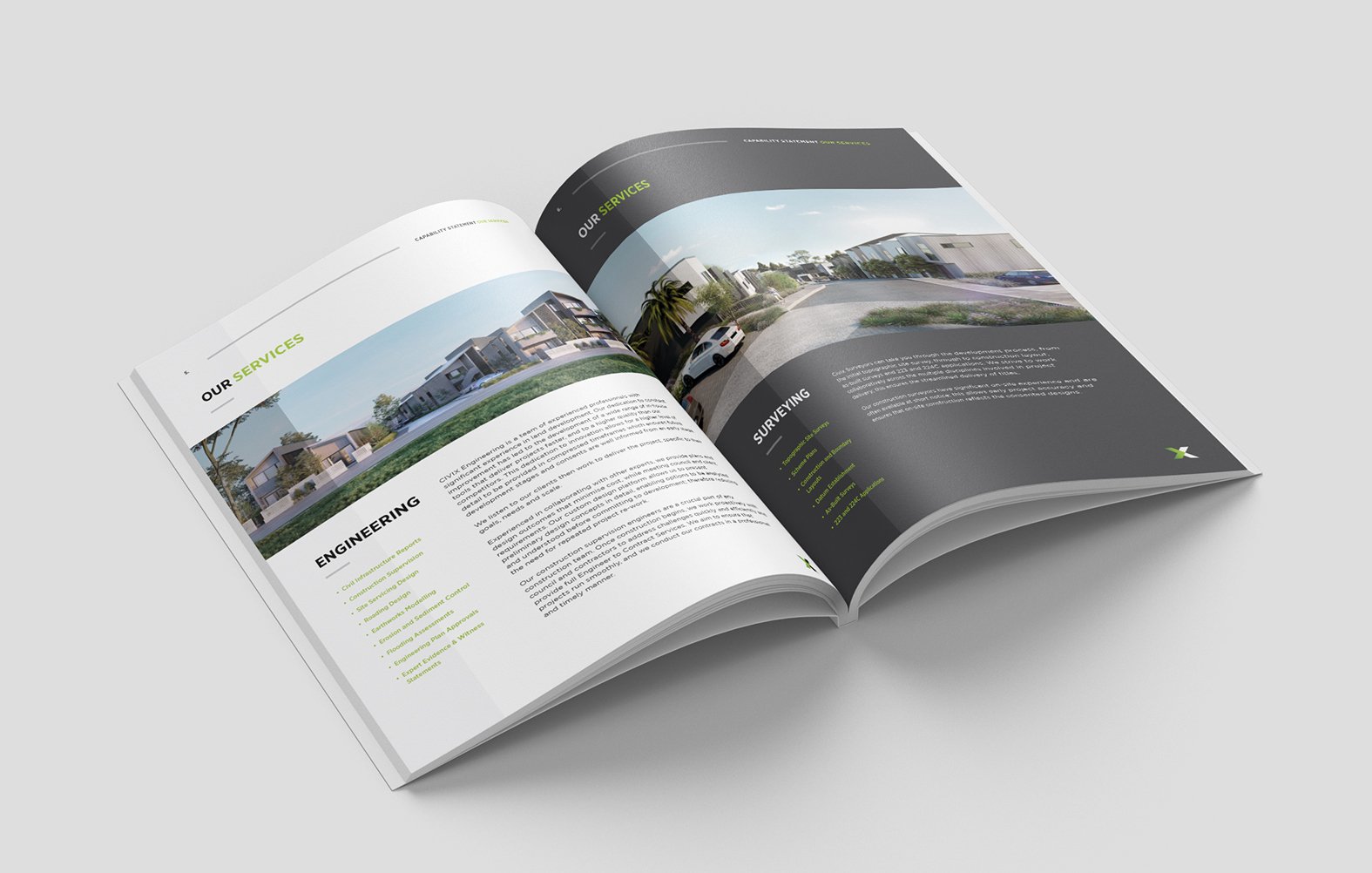
For many construction, engineering, infrastructure, and property businesses, a capability statement is often one of the first documents a potential client will review.
Whether you’re submitting a proposal, responding to a tender, attending a capability presentation, or introducing your business to a prospective client, your capability statement helps communicate who you are, what you do, and why you’re qualified to do it.
The problem is that many capability statements are either too long, poorly structured, outdated, or focused on the wrong information.
A strong capability statement should quickly build credibility, demonstrate experience, and make it easy for clients to understand your expertise. Here are the key elements every capability statement should include.
-
A capability statement is a concise document that provides an overview of your business, services, experience, and qualifications.
Think of it as a snapshot of your business.
Its purpose is to help potential clients quickly assess whether your company is capable of delivering the work they require.
Unlike a proposal, which responds to a specific opportunity, a capability statement is a broader business overview that can be used across multiple situations.
-
A capability statement often influences whether your business progresses to the next stage of a conversation.
It helps clients understand:
What your business does
Your areas of expertise
Relevant project experience
The scale of work you undertake
Why they should consider working with you
For many businesses, it serves as a valuable business development and marketing tool.
-
Every capability statement should begin with a brief introduction to the business.
This section should clearly explain:
Who you are
What you do
Who you work with
Where you operate
Keep it concise and focused.
Avoid lengthy company histories unless they are directly relevant.
-
One of the most important sections is a clear summary of your services.
Clients should be able to understand your capabilities at a glance.
Consider grouping services under logical categories and using bullet points to improve readability.
For example:
Engineering Consultancy
Civil engineering
Land development engineering
Infrastructure design
Surveying
Topographical surveys
Construction set-out
Land transfer surveys
Project Management
Design management
Procurement support
Construction monitoring
The easier this section is to scan, the better.
-
Why should a client choose your business over another?
This section should highlight the factors that make your business different.
Examples may include:
Specialist expertise
Industry experience
Technical capability
Geographic reach
Unique methodologies
Proven track record
Focus on meaningful points rather than generic statements such as “quality service” or “customer focused”.
-
Project experience is often one of the most valuable parts of a capability statement.
Clients want evidence that you have successfully delivered similar work before.
Include:
Project name
Client
Location
Scope of services
Brief project summary
Where possible, include high-quality project photography.
Select projects that align with the work you are seeking rather than simply listing everything you’ve completed.
-
People are often a significant factor in purchasing decisions.
Introduce key team members and highlight:
Qualifications
Experience
Areas of expertise
Professional memberships
Keep biographies concise and relevant.
The goal is to demonstrate capability rather than provide a complete career history.
-
Show prospective clients who you work with and the sectors you operate in.
This may include:
Government
Local government
Infrastructure
Commercial
Residential
Industrial
Property development
Relevant client logos can also help reinforce credibility where permission has been granted.
-
If applicable, include relevant credentials such as:
ISO certifications
Industry accreditations
Professional memberships
Health and safety certifications
Prequalification status
These provide additional confidence and help demonstrate compliance with industry requirements.
-
It sounds obvious, but contact details are often overlooked.
Include:
Phone number
Email address
Website
Office location
Key contact person
Make it easy for clients to take the next step.
Common Capability Statement Mistakes
Some of the most common issues include:
Too much text
Poor structure
Outdated project information
Low-quality images
Inconsistent branding
Generic messaging
Lack of clear service descriptions
A capability statement should be easy to read, visually professional, and focused on the information clients actually care about.
Final Thoughts
A capability statement is more than a company profile. It is a business development tool that helps communicate your expertise, experience, and credibility.
The best capability statements are concise, professionally designed, and tailored to the type of work you want to win.
If your current capability statement is outdated, difficult to navigate, or no longer reflects your business, it may be time for a refresh.
Frequently Asked Questions
-
Most capability statements range from four to twelve pages depending on the complexity of the business and the information being presented.
-
A capability statement focuses on services, expertise, and relevant experience. A company profile is often broader and may include more detailed background information.
-
Yes. Relevant project experience is often one of the most important sections of a capability statement.
-
It should be reviewed regularly and updated whenever there are significant changes to services, personnel, certifications, or project experience.
-
A core capability statement can be used as a base document, but tailoring sections to suit specific clients or sectors often improves effectiveness.